Latest update: 26 August 2026 - 50 min read
NDIS Provider Registration: Is It Worth the Cost?
If you run a small care business, NDIS provider registration may soon become an important business decision.
This guide explains the key dates, likely costs, how to assess the business case, and the systems you’ll need—whether you register or remain unregistered.
In short: The National Disability Insurance Scheme Amendment (Securing the NDIS for Future Generations) Bill 2026 is now law, but that doesn’t mean every change is in force yet. Registration is only mandatory for specific support types today, budget and price changes phase in from October 2026 and January 2027, and most providers can still operate unregistered. NDIS provider registration cost depends on your registration groups — from around $900 for a simple verification audit to $19,600 for certification at a larger organisation — so whether NDIS provider registration is worth it comes down to how much agency-managed revenue and community participation work you do.
It’s important to note that not every announced reform is currently in force. The Securing the NDIS for Future Generations Bill 2026 passed Parliament in August 2026, but some of what it enables — budget reductions and expanded mandatory registration — has not yet begun, and registration will not become mandatory for every provider.
However, the economics are changing. From January 2027, unregistered providers delivering Social, Community and Civic Participation (SCCP) community access supports are expected to receive lower payment rates for the same services, including travel.
Before deciding whether registration is worthwhile, you need to understand how the rate difference could affect your revenue. Our calculator can help you model the business case using your own numbers.
| ## NDIS reform: the legal bit, at a glance* Now law: The National Disability Insurance Scheme Amendment (Securing the NDIS for Future Generations) Bill 2026 passed both houses on 19 August 2026 and received assent on 20 August 2026. |
- Also law: The Integrity and Safeguarding Act 2026 allows plan funding to increase or decrease and makes some high-risk supports illegal to provide while unregistered.
- Registration is mandatory for: Specialist Disability Accommodation, specialist behaviour support and restrictive practices, plan management, Supported Independent Living (SIL) and digital platforms. Personal care and home and living supports follow from 1 July 2027. Other supports can still be delivered unregistered.
- Budgets are changing too: participant plan budgets reset from 1 October 2026, and price limits for some supports delivered by unregistered providers fall from 1 January 2027. Price limits are separate, and set by the National Disability Insurance Agency (NDIA). |
Should you register as an NDIS provider?
Two things decide whether you end up a registered vs. unregistered NDIS provider:
- The type of work you carry out.
- Whether the participants you work with are agency-, plan-, or self-managed.
The support type: Registration is mandatory, regardless of team size, for Specialist Disability Accommodation, specialist behaviour support and restrictive practices, plan management, and both SIL and digital platform providers.
Participants’ plan: Agency-managed participants can only use registered providers. Plan-managed and self-managed participants can use unregistered ones. NDIS’s own quarterly data puts agency-managed funding at around 27% of payments, so roughly 70% of participant spending can still come to you while you’re unregistered.
So a sole trader with no employees can operate unregistered indefinitely, as long as they avoid mandatory support types and agency-managed participants. Registration isn’t becoming universal either. The government’s preferred model covers only the highest-risk supports initially, expanding in stages from July 2027 over four years, and pauses mandatory registration for support coordination.
What happens if you don’t register
You can keep operating.
But from 1 January 2027, recommended maximum prices for social, community, and civic participation supports delivered by unregistered providers drop 10%, then freeze with no indexation. The reduction covers provider travel and activity-based transport, not just the support.
You’d drive the same kilometres as a registered competitor and earn less for it, with the gap widening yearly. Certification takes eight to twelve months, so model this now.
| Date | What happens |
|---|---|
| 1 Oct 2026 | Grace deadline for existing unregistered SIL providers to apply. Plan budget reset begins. |
| 1 Dec 2026 | You get 90 days from delivering a support to claiming for it, down from two years. Miss the window, and you can’t be paid for work you’ve already done. |
| 1 Jan 2027 | Unregistered community participation providers: prices cut 10%, then frozen. |
| 1 Jul 2027 | Registration expansion begins for all high-risk supports, eventually covering around 90% of payments. |
What does NDIS provider registration cost, and is there a business case?
There’s no application fee. Your NDIS registration cost is what you pay an approved quality auditor directly, and it depends on your registration groups and business size.
| Pathway | Typical cost |
|---|---|
| Verification audit only (desktop review, low risk) | approximately $900 to $1,800 |
| Verification pathway, realistic all-in for a sole trader | approximately $2,700 to $5,500 |
| Certification pathway, sole trader or small organisation | approximately $5,700 to $10,300 |
| Certification pathway, medium organisation | approximately $9,800 to $19,600 |
These are typical ranges only — auditor pricing varies, and secondary sources don’t fully agree on exact figures, so treat them as a planning guide, not a quote. The jump between rows two and three is about which pathway your registration groups put you on. A sole trader whose group requires certification pays the certification price, not the sole trader verification figure above it.
Determine these numbers before you decide
- Revenue split by funding management type. How much comes from agency-managed participants you can’t currently serve, versus plan-managed and self-managed clients you’d keep either way?
- Revenue from community participation. Multiply by 10%, then project forward with no indexation while registered competitors get annual rises. That’s your cost of staying unregistered, compounding.
- Travel volume in kilometres. The January 2027 cut hits travel, too, so if you drive a lot, your exposure is bigger than your support hours suggest.
- True cost per visit, including travel. Without it, you can’t tell whether registered pricing is profitable, or whether you’d do better by narrowing your service area.
Most providers will already have revenue numbers from claims data, while travel data is traceable from your mileage tracking.
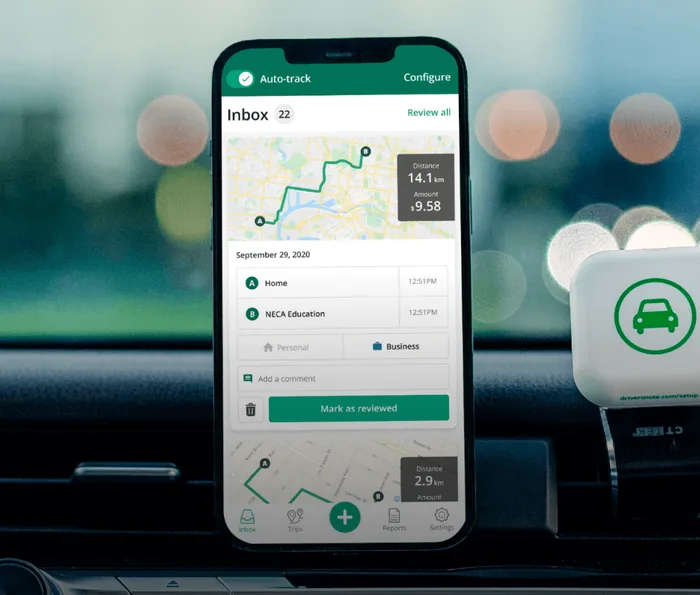
Mileage isn’t only a reimbursement line, either. It’s a hidden part of the expenses picture: trips that go unclaimed, routes that aren’t efficient, or kilometres that get inflated all quietly eat into your margin. In a reform environment where every claim counts, that’s not a gap worth leaving unmeasured.
Using our registration business case calculator below, you can build your scenarios.
NDIS Registration Business Case Calculator
Work out what staying unregistered costs you, and whether registering pays for itself. Example figures for a small provider are pre-filled — replace them with your own.
1 Your revenue today
Agency-managed participants can only use registered providers — that revenue is closed to you until you register.
2 If you registered
Only the margin on new agency-managed work counts as a benefit — not the whole invoice.
3 Exposure to the 1 Jan 2027 price cut
Unregistered providers of social, community and civic participation supports face a lower price limit from 1 Jan 2027, then frozen with no indexation.
4 Travel & visits
If you don't know your total business kilometres, that's itself a finding.
5 What registration would cost
Advanced settings — rates & assumptions
These come pre-filled from current NDIS and SCHADS figures — see notes and sources below. Change them to test other assumptions.
Four-year outcome
On these numbers
—
| Item | Year 1 | Year 2 | Year 3 | Year 4 | 4yr total |
|---|
Scroll sideways to see all four years
Notes, assumptions & sources
- $0.99/km — NDIS provider travel, non-labour cost cap.NDIS Pricing Arrangements and Price Limits 2025–26 v1.1.
- $1.01/km — SCHADS clause 20.7(a) vehicle allowance, from 1 July 2026, the award minimum you must reimburse.Fair Work Ombudsman Pay Guide MA000100.
- 10% price cut — applied to unregistered providers of social, community and civic participation supports from 1 Jan 2027, then frozen with no indexation. Covers provider travel and activity-based transport.NDIA Annual Pricing Review for 2026–27 prices.
- 4% annual indexation — an assumption, not a published forward rate. Disability support worker prices rose about 3.95% in 2025–26 and about 4.8% in 2026–27. Test other rates in advanced settings.
- Registration cost pathways — verification (23 of 36 registration groups) runs roughly $2,700–$5,500 all-in; certification for a small organisation roughly $5,700–$10,300. One certification group puts the whole application on that pathway — community participation (groups 0125 and 0136) is certification, so providers most exposed to the price cut are on the more expensive one.NDIS Quality and Safeguards Commission, approved quality auditor market pricing 2026.
- Agency-managed access — agency-managed participants can only use registered providers; plan-managed and self-managed participants may use unregistered providers.NDIS Quality and Safeguards Commission.
- 15% contribution margin — an assumption for what you keep on new agency-managed work after the labour and travel cost of delivering it. New revenue is not new profit.
What this calculator doesn't do:
- It doesn't model the 1 October 2026 plan budget reset, which cuts participant budgets rather than price limits.
- It doesn't model the 90-day claim window that starts on 1 December 2026.
- It assumes community participation revenue holds flat in volume terms — if the budget reset reduces demand, both the stay and register figures fall.
Estimate only, for general information and not financial or legal advice. Check the current NDIS Pricing Arrangements and Price Limits and the SCHADS Award before you decide. If you don't actually know your total business kilometres, start tracking every trip automatically with Driversnote Teams so this calculator — and your claims — run on real numbers.
What can push your costs up
NDIS registration requirements aren’t uniform across groups: most registration groups need only a verification audit, a desktop review of your policies, qualifications and insurance, while a smaller number need certification, which adds an on-site audit against the NDIS Practice Standards.
The NDIS Commission publishes the full list of registration groups and their audit type, so check yours against it rather than relying on a fixed count of how many groups fall into each pathway — secondary sources don’t fully agree on that split, but the Commission’s own list is authoritative for your groups. If your application covers groups with both audit types, the Commission requires a certification audit for the whole thing.
So, a provider doing mostly low-risk work who adds a single personal care line pays certification prices across everything: roughly $900 to $1,800 for verification versus $5,700 to $10,300 once certification applies to the whole application.
Check it especially carefully if you do community participation work. Groups 0125 and 0136 both need certification, so the providers most exposed to the January 2027 price cut are also the ones facing the more expensive pathway. Budget for $5,700 to $10,300 rather than the verification pathway figure above. It’s also worth watching cost recovery: the government has flagged moving toward recovering more of the Commission’s running costs through registration over time, though the detail and timing are still vague in current Budget papers, so don’t bank on a specific year or figure yet.
And time is usually the tighter constraint. From lodging your application to holding your certificate of registration takes three to twelve months on the verification pathway, and eight to twelve months on the certification pathway. Work back from 1 January 2027, and the window has already closed for most providers starting from scratch.
How to become an NDIS provider
If the business case stacks up, registration itself runs through the NDIS Quality and Safeguards Commission, not the NDIA, and it’s a set process rather than a form you fill in once.
How to start an NDIS business: where registration fits
If you’re starting an NDIS business from scratch rather than adding registration to an existing one, the steps below are the registration-specific part of that process — on top of the usual business set-up (ABN, insurance, an NDIS-compliant policy set) you’d need regardless of whether you register.
- Confirm your registration groups and pathway. Match the supports you deliver against the Commission’s list of registration groups to see which need verification and which need certification. Do this before you apply, not after — as covered above, one certification-level group pulls your whole application onto the more expensive, slower pathway.
- Set up a Provider Digital Access (PRODA) account — Services Australia’s identity-verification login. This is how you access the NDIS Commission’s Applications Portal, where the whole process is completed online.
- Submit your application. In the portal, you list the registration groups you’re applying for, complete a self-assessment against the relevant NDIS Practice Standards with supporting evidence (policies and procedures, insurance, worker screening for at-risk roles, and details of key personnel), and answer suitability questions. An unfinished application is deleted after 60 days, so don’t start until you’re ready to see it through.
- Engage an approved quality auditor. Once you submit, the Commission issues an Initial Scope of Audit. From there, it’s on you to choose and pay an independent auditor from the Commission’s approved list — get a few quotes, since prices vary between auditors and this is what drives the cost ranges above.
- Complete the audit. For verification, that’s a desktop review of your evidence. For certification, it adds an on-site visit against the NDIS Practice Standards. Either way, the auditor submits their recommendation to the Commission, not a pass/fail to you directly.
- Wait for the Commission’s decision. The Commission reviews the auditor’s recommendation and your suitability information, and may come back for more detail before deciding. This review stage is most of the three-to-twelve months (verification) or eight-to-twelve months (certification) mentioned earlier, so build the lag into your planning against the 1 January 2027 deadline.
- Receive your certificate of registration. An approval comes with a certificate listing your registered supports, your registration period, and any conditions attached. Renewal follows the same steps again, and the Commission lets you start that process any time in the six months before your certificate expires.
Where to start
The three important takeaways:
- The reform is now law, and the cuts start on 1 October 2026, so you have a short window to prepare rather than react.
- NDIS provider registration is triggered by what you deliver and how your participants’ plans are managed. If you’re unregistered in community participation, model the January 2027 price reduction now, because it hits your travel as well as your support hours.
- You need information about your kilometres. They determine your true cost per visit, decide whether your travel is profitable or losing money, and you can’t build the business case without them.
If your team still logs trips on paper, that’s the cheapest thing to fix this quarter.
Tired of logging mileage by hand?
Effortless. IRS-compliant. Liberating.
 Auto-track trips
 Classify trips
 IRS compliant reports