Latest update: 23 April 2026 - 10 min read
Guide to Grey Fleets in Australia
A grey fleet is when employees use their own vehicles for work. It’s more common in Australia than most businesses realise — and if your people ever drive between sites, visit customers, or run a work errand in their own car, you’re already managing one, whether you call it that or not.
The good news: running a grey fleet well isn’t complicated. A few clear policies, consistent tracking of business kilometres, and the right compliance checks will cover most of what Australian employers are expected to do.
This guide walks you through what a grey fleet actually is, what falls to you as the employer, and the practical steps to keep it manageable as your team grows.
What is a grey fleet?
A grey fleet is any vehicle used for work that isn’t owned, leased, or directly provided by the business.
In most cases, that means employees driving their own cars. But the definition also covers:
- Vehicles funded through a car allowance
- Novated leases and salary-packaged vehicles
- Hire cars and short-term rentals used for work
- Vehicles used by contractors, freelancers or volunteers carrying out work on behalf of the business
- A client’s vehicle driven by a worker — often called a “double grey fleet,” and common in community care and healthcare settings.
It’s a grey fleet whether or not the driver is reimbursed, and it isn’t limited to cars. Utes, vans, 4WDs, motorcycles, scooters — even bicycles, in some contexts — can all fall under the grey fleet.
| ### The simplest test: if the vehicle isn’t owned or controlled by the business but is being used for work, it’s part of the grey fleet. |
Who’s a grey fleet driver?
A grey fleet driver is anyone using a non-company vehicle for work-related travel. In practice, that’s a broad group:
- Employees receiving a car allowance instead of a company car
- Staff using their own car for occasional trips (customer visits, training, site inspections, errands)
- Sales reps, consultants and field technicians visiting customers or sites
- Community care and healthcare workers travelling between clients
- Apprentices driving to and from worksites
- Contractors, freelancers and gig workers driving as part of their role
Most of these drivers won’t think of themselves as “fleet drivers” at all — which is part of why a grey fleet can sit invisible inside an organisation for years.
Grey fleet vs company cars vs novated leases
| Vehicle type | Ownership | Your responsibility as employer | Who typically manages it |
| Grey fleet | Owned, leased or rented by the employee (or a third party) and used for work | Duty of care, record-keeping of business km, verifying registration, licence and business-use insurance | Shared — you set the policy, the employee maintains the vehicle |
| Company car | Owned or leased by the employer | Full operational, safety and compliance responsibility. Cover all costs. FBT reporting where private use is allowed | Employer (usually fleet manager or finance) |
| Commercial fleet | Employer-owned or leased, for business use only (vans, utes, specialised vehicles) | Full operational, safety and compliance responsibility. Cover all costs | Employer (fleet manager) |
| Hire / rental | Short-term rental for business use | Safe use and usage tracking, fuel and expense control required | Employer (operations or finance) |
| Novated lease | Salary-packaged vehicle linked to the employee | FBT treatment differs, but safety duties can still apply when the vehicle is used for work | Shared — employer and leasing provider |
However, ownership isn’t the whole story. SafeWork Australia’s national guidance on vehicles as a workplace includes worker-owned and salary-packaged vehicles when they’re used in the course of work. That’s why novated lease vehicles often need to fall under grey fleet safety processes, even though their tax treatment differs.
Why a grey fleet is becoming the norm in Australia
A few things have quietly made a grey fleet the default for many Australian businesses.
Workplace flexibility. Hybrid work and less predictable schedules mean employees often prefer to use their own vehicle rather than be tied to a company car. For employers, that flexibility removes the cost of assets sitting idle when teams change shape.
Cost control. Relying on employee-owned vehicles frees up capital and cuts spending on servicing, maintenance, insurance, and fleet admin. Reimbursement through ATO-approved methods — the cents-per-kilometre method (for up to 5,000 business km per car per income year) or the logbook method (a 12-week continuous record valid for up to five years) — keeps the arrangement straightforward.
Tax and fringe benefits. Fringe Benefits Tax treatment often makes a traditional company car a less attractive perk, nudging more employees toward using their own vehicle and receiving reimbursements.
Driving patterns. Business travel has become more fragmented since the pandemic. More online meetings, fewer long trips, and less predictable schedules make a full company fleet harder to justify.
Mileage data from Driversnote bears this out: employees are driving on more days of the year, but journeys are shorter and less predictable — which is exactly the shape of work that suits a grey fleet, and one that manual logs struggle to capture accurately.
What are employers responsible for?
Under Australian work health and safety law, a vehicle used for work is considered a workplace. That’s set out in the model Work Health and Safety Act 2011 — adopted by the Commonwealth and most states and territories.
The practical consequence: your duty of care as an employer extends to work-related driving in the same way it applies to any other task. It extends to worker-owned vehicles when they’re being used in the course of work — not to an employee’s ordinary home-to-work commute, but to any driving that’s part of the job (a client visit, a site trip, a supply run).
Day to day, that means making sure:
- Drivers hold a current, valid licence for the vehicle class they’re driving
- Vehicles are registered and roadworthy, including state-based checks where they apply
- Insurance covers business use — standard private-use policies often don’t
- Work-related travel is recorded consistently through accurate mileage tracking
- There’s a clear grey fleet policy that employees know about
Alongside this, there’s an ATO side. This is where your business (most likely) reimburses employees for work-related kilometres. Accurate records are what unlock compliant reimbursement under either the cents-per-kilometre method or the logbook method.
For both, the quality of the underlying data matters more than the method itself — reconstructed logs at tax time create friction for finance and risk for the driver.
If you run an NDIS or care organisation, your grey fleet duty of care sits alongside award-specific vehicle allowance rules that vary by role. Our NDIS & Care Provider Guide covers vehicle allowance rates by award, NDIS travel claims, and WHS duty of care for a mixed-award care team.
What good grey fleet management looks like
Good grey fleet management isn’t about building a fleet program from scratch. It’s about visibility and consistency — knowing who’s driving for work and whether the basics are covered.
A workable setup usually includes:
| Control | Why it matters |
| Written grey fleet policy | Sets expectations for drivers, managers and approvers in one place |
| Licence and document checks | Confirms drivers and vehicles are legally fit for work use |
| Business-use insurance confirmation | Prevents cover gaps that private-use policies don’t fill |
| Consistent tracking of business kilometres | Supports reimbursement, FBT reporting, and duty-of-care records |
| Incident reporting process | Makes work-related driving events visible so they can be acted on |
| Periodic review | Keeps controls current as the team grows and work patterns shift |
The National Road Safety Partnership Program (NRSPP) framework goes further and recommends controls around journey planning, driver education, vehicle suitability, and ongoing review.
The practical takeaway: the biggest risk isn’t usually one missing document — it’s the absence of a repeatable system.
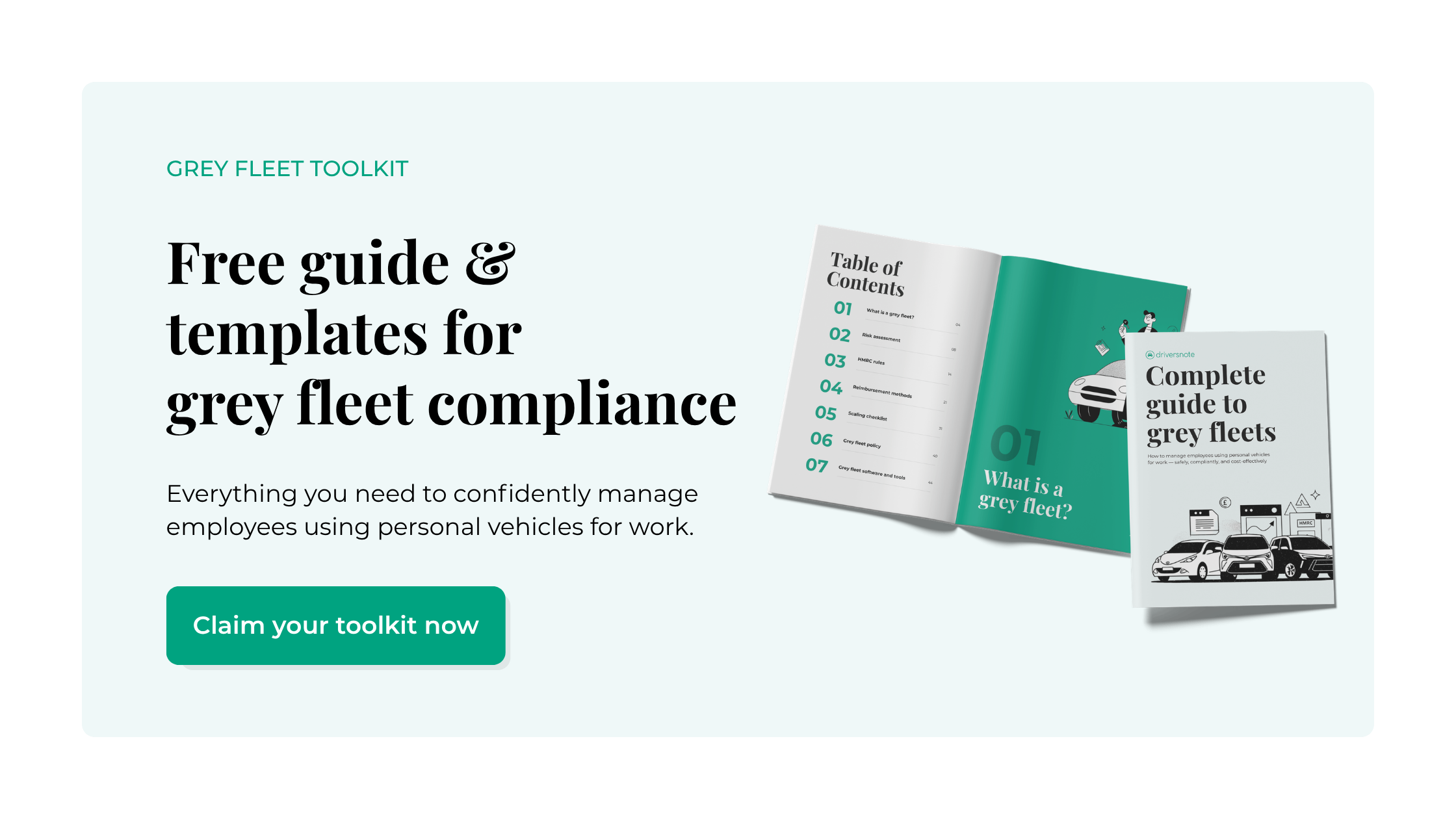
Want inspiration for assessing the risk in your organisation? Use our practical template for a grey fleet risk assessment.
Who actually manages a grey fleet?
Because a grey fleet isn’t a traditional fleet, internal ownership can be unclear.
When there are no (or just a few) company-owned vehicles, you might not have a dedicated fleet manager or fleet management software in place.
As a result, grey fleet responsibility tends to spread across teams: finance runs reimbursements, HR handles policy, operations knows who’s driving, and if you have internal WHS officers, they might own the risk side.
But you don’t necessarily need a new department or a heavy admin setup. What you do need is clear ownership of:
- A written policy and simple guidance for employees on trip tracking, insurance, and safe driving practices
- ATO-compliant reimbursement processes
- Regular verification of licence, registration, insurance, and — where relevant — safety inspections
- A single source of truth for business kilometres
Whether that ownership sits with finance, HR, operations, a nominated fleet lead, or a team admin, what makes it stick is the combination of clear process and the right tools.
As a grey fleet grows past 10, 25, and 50 drivers, informal habits start to break down — documentation becomes inconsistent, reimbursement disputes increase, and the audit trail thins. The earlier you put structure in place, the easier it is to scale in the next stage.
How confident are you in your grey fleet setup?
A quick gut check for fleet managers, CFOs, bookkeepers, HR leads and team admins:
- Do you know which employees drive their own car for work?
- Are those vehicles insured for business use?
- Are business kilometres tracked consistently — or reconstructed at tax time?
- Do you have a written grey fleet policy?
- Do licence, registration, and insurance checks happen on a schedule?
If the answer to any of these is “not really,” that’s normal — and it’s the starting point.
Most of the time, the next step isn’t adding more complexity. It’s replacing informal habits with a repeatable process, documenting expectations, and standardising how business trips are recorded.
Also read: Risk assessment - a practical guide for Australian employers
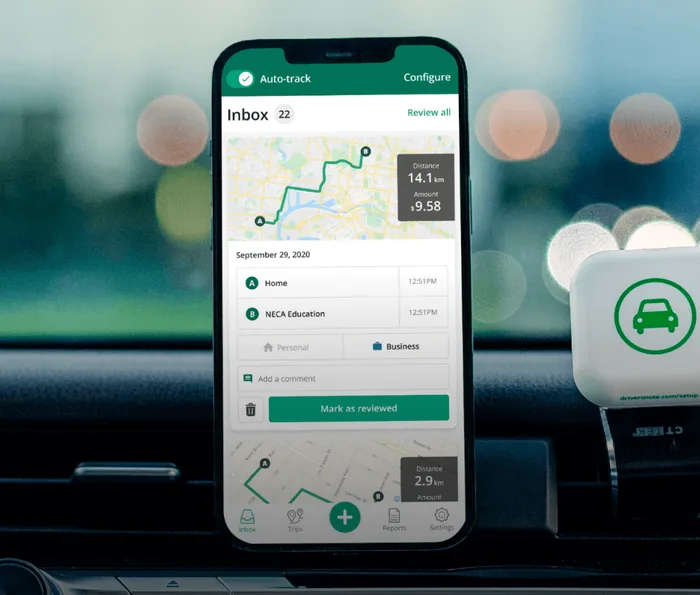
Tired of logging mileage by hand?
Effortless. IRS-compliant. Liberating.
 Auto-track trips
 Classify trips
 IRS compliant reports