Track mileage automatically
Get started
How To Keep a Car Log Book for Tax in Australia
A car log book is your proof to the ATO that the kilometres you're claiming were genuinely for business. Get it right, and you could claim hundreds — or thousands — of dollars in deductions. Get it wrong, and the ATO can reject your entire claim.
This guide covers what to record, how to calculate your deduction, and the mistakes that most commonly invalidate a logbook at audit time.
Which method do you need a log book for?
There are two ways to claim car expenses with the ATO, and the log book requirements differ for each.
| Log book method | Cents per km method | |
| Who it suits |
High-km drivers, higher car expenses |
Low-km drivers, simple claims |
| Annual km cap | No cap | 5,000 km per year |
| What you can claim |
% of all actual car expenses |
Fixed rate per km ($0.88 for 2025/26) |
| Log book required? |
Yes — 12 continuous weeks |
Recommended, not mandatory |
| Receipts required? |
Yes — fuel, rego, servicing, etc. |
No |
The rule of thumb: if you drive more than 5,000 km for work per year, or your actual car expenses are high, the logbook method will almost always produce a larger deduction. Below that threshold, cents per km is simpler.
For a full breakdown of both methods, see the ATO logbook method guide and the cents per kilometre method.

Kilometre tracking made easy
Trusted by millions of drivers
Automate your logbook Automate your logbook
Automatic mileage tracking and ATO-compliant reporting.
Get started for free Get started for freeWhat to record in your log book
For the logbook method
According to the ATO, your logbook must cover at least 12 continuous weeks and include the following.
For the logbook period overall:
- Start and end dates of the logbook period
- Odometer reading at the start and end of the period
- Total kilometres driven during the period
- Business-use percentage
- Vehicle make, model, engine capacity, and registration number
- Odometer readings at the start and end of each subsequent income year the logbook is valid for
For each individual trip:
- Start and end date
- Odometer readings at the start and end of the trip
- Kilometres travelled
- Purpose of the journey (business or private)
You must record every trip — not just work trips. Private trips need to be logged too, even if you only note them as "private use." This is one of the most common reasons the ATO rejects logbooks.
Your logbook is valid for 5 years, provided your driving patterns don't change significantly. If they do, start a new one.
For the cents per km method
The ATO doesn't require a formal logbook for cents per km claims, but they can ask you to show how you calculated your business kilometres. Keep a simple record of your work trips — date, destination, distance, and purpose — so you're covered if they do.
You don't need to keep receipts for car expenses under this method.
How to calculate your tax claim
Logbook method
Once your 12-week logbook period is complete, use this formula:
- Work out your business-use percentage: divide your business kilometres by your total kilometres, then multiply by 100.
- Add up all car expenses for the financial year (fuel, rego, insurance, servicing, loan interest, depreciation).
- Multiply total expenses by your business-use percentage to get your deductible amount.
Example:
- Total km driven: 15,000
- Business km: 6,000
- Business-use percentage: (6,000 / 15,000) x 100 = 40%
- Total car expenses for the year: $8,500
- Deductible amount: $8,500 x 40% = $3,400
There's no cap on how much you can claim with the logbook method, which is why it's worth the extra record-keeping if your expenses are significant.
Cents per km method
Multiply your total business kilometres by the ATO rate for the financial year (capped at 5,000 km).
Example:
- Business km: 3,200
- Rate (2025/26): $0.88
- Claim: 3,200 x $0.88 = $2,816
Use our ATO cents per km calculator now.
Common mistakes that invalidate a logbook
This is where most claims fall apart. The ATO can — and does — reject deductions based on log book errors. These are the mistakes that come up most often.
- Not logging private trips. Your log book must include every trip, business and private. A logbook that only shows work trips appears incomplete and raises red flags. Even a short personal errand needs an entry.
- Missing odometer readings. Odometer readings are required at the start and end of each trip, at the start and end of the 12-week period, and at 30 June each year the logbook is in use. Missing any of these can invalidate the whole record.
- Vague trip purposes, "Work" or "meeting" isn't enough. The ATO expects sufficient detail to verify the business purpose — for example, "client visit — Smith & Co, Parramatta" or "site inspection — 14 George St, Brisbane." The more specific, the better.
- The 12-week period isn't representative. Your logbook period should reflect your typical driving patterns throughout the year. If you only log during your busiest period, the ATO may argue the business-use percentage is inflated.
- Not keeping receipts. Your log book establishes the business-use percentage, but your receipts prove the actual expenses. Without them, you can't substantiate the dollar amount you're claiming. Keep receipts for fuel, rego, insurance, servicing, and any loan or lease documents.
- Letting the log book expire. A log book is valid for five years — but only if your driving patterns stay roughly the same. If your role changes, you move, or your work travel increases or decreases significantly, start a new log book. Continuing to use an expired or misaligned logbook is a common audit trigger.
|
Keep your logbooks for at least five years after lodging your return. The ATO can audit claims from prior years, and you'll need the records to back up your deductions.
|
Log book formats the ATO accepts
The ATO accepts both physical and digital log books, so the format is your choice. Options include:
- Paper logbook — available from newsagents and stationery suppliers
- Spreadsheet or Excel file — works well if you're disciplined about updating it after every trip
- PDF log sheet — printable, good for archiving
- Mileage tracking app — automatically records trips via GPS, significantly reducing manual effort
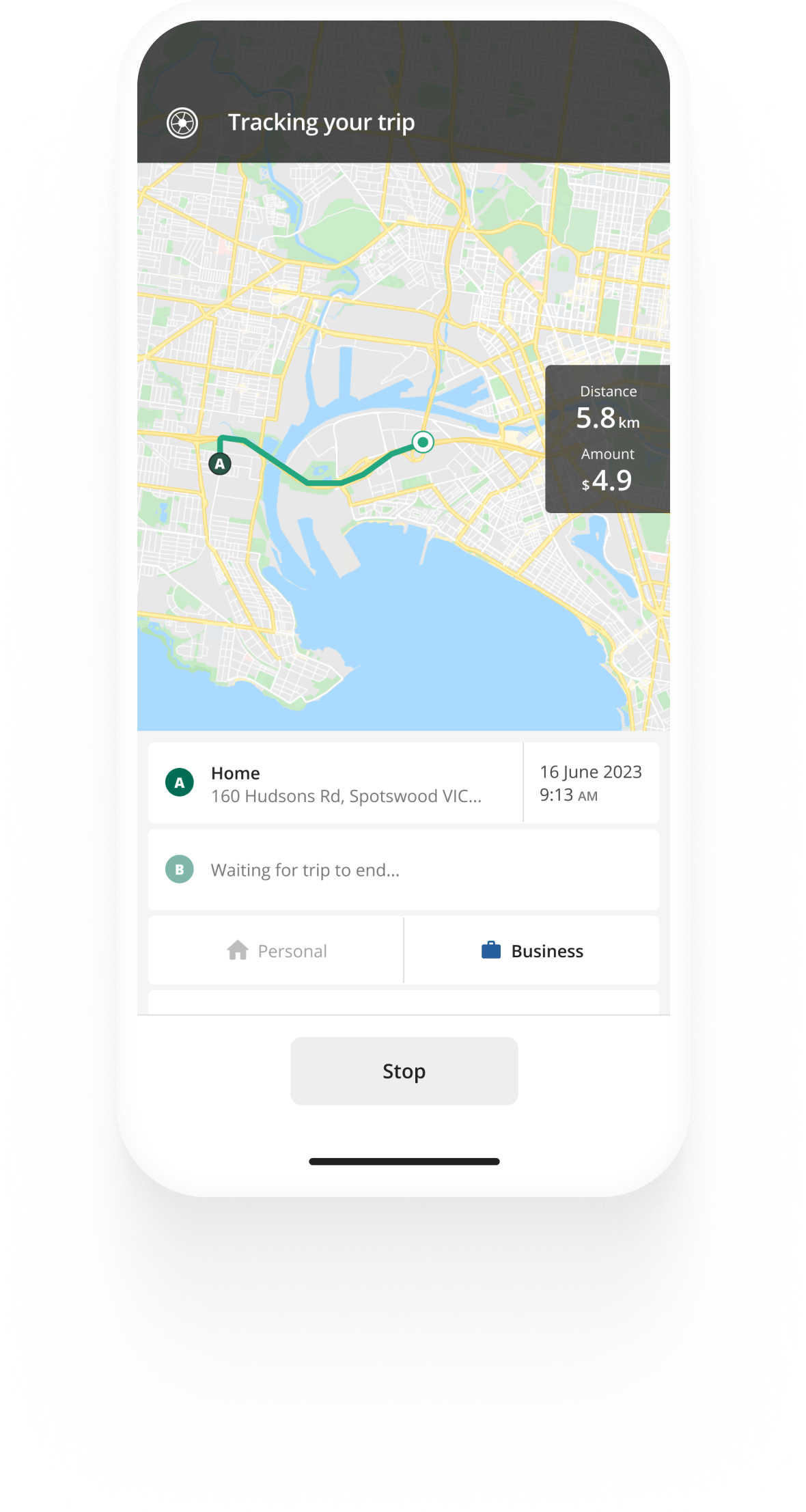
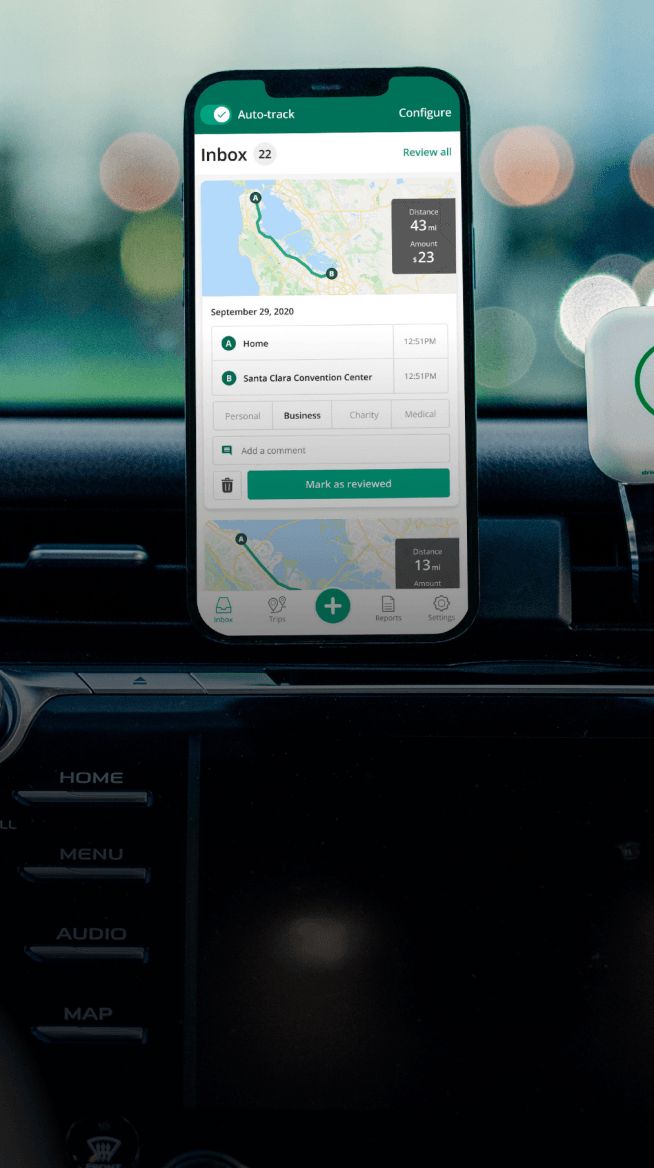
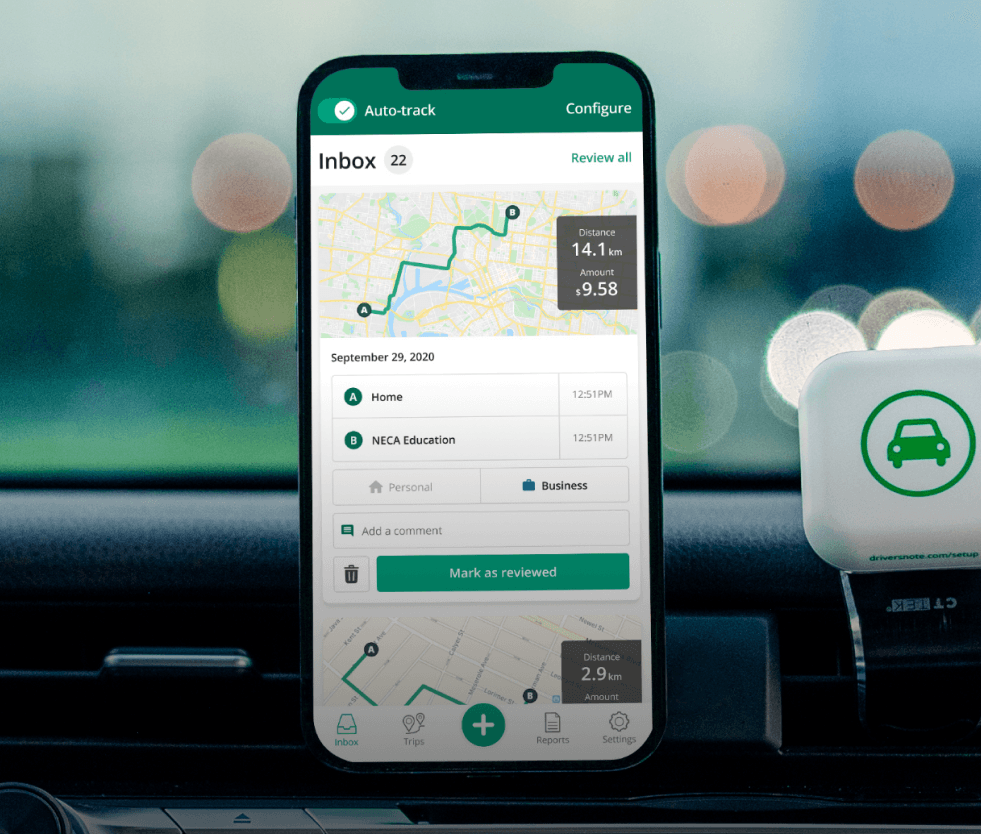
An app like Driversnote tracks trips automatically and generates ATO-compliant reports in PDF or Excel, so your logbook is always up to date without the manual data entry. You still need to classify trips as business or private, but the odometer readings, distances, and dates are captured for you.
Download a free ATO-compliant vehicle log book template in Excel, Google Sheets, or PDF.
Is the logbook method time-consuming?
The logbook method may be time-consuming, depending on how many trips you take. Still, you can claim all actual expenses related to using your vehicle for business purposes.
However, using an app to log your trips will significantly reduce the time you spend maintaining your log book for tax purposes. You will only need to keep track of your receipts.
FAQ
Tired of logging mileage by hand?
Effortless. ATO-compliant. Liberating.
Top posts
Related posts

ATO Mileage Guide
Latest update: 23 June 2025 - 5 min read
Learn about the rules of reimbursing employees for their car expenses or deducting expenses as an employee or self-employed individual.
How To Keep a Car Log Book
Latest update: 10 March 2026 - 5 min read
Find ATO's requirements for keeping compliant log books of your business driving for the logbook or the cents per km method.
.svg)
ATO Vehicle Log Book Template
Latest update: 10 March 2026 - 2 min read
Get the free 2026 vehicle log book template in Excel, PDF, and Sheets format. Compliant with ATO rules for your business km records.